
Since the end of the month overlaps, there will be a seven-day holiday from the 3rd to the 9th. If you take paid leave on Friday the 10th, you can make it a 10-day holiday, including Saturday and Sunday, the longest in history.
On the 15th, the government and the ruling Democratic Party of Korea held talks on price control measures for the mid-autumn celebrations.
The mid-autumn celebration is one of Korea's most famous holidays, along with Seollal (Lunar New Year), and is a time when relatives gather in their hometowns.
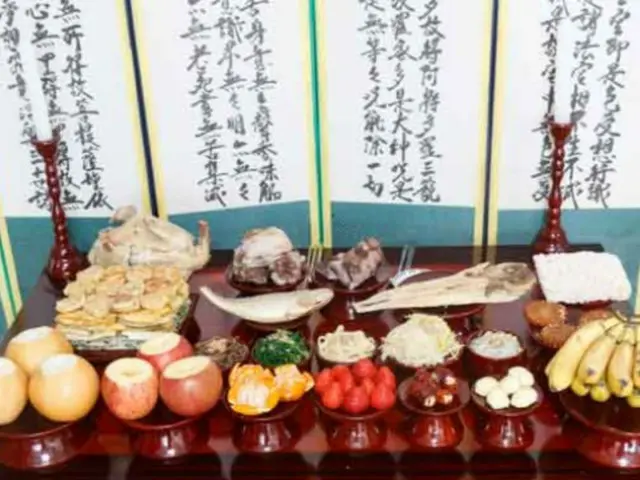
It is common to visit the graves of ancestors and have a meal together. Also, on the morning of the mid-autumn celebration, a ceremony called "Chare" (tea ceremony) is held to welcome the spirits of ancestors, and vegetable natto is placed on the altar.
Many foods are offered, including mul, meat, and fish. The sight of massive traffic jams on the highways and crowded Seoul Station during the large-scale return home rush known as the "Great Migration" is a familiar sight.
This year, it is possible to have a 10-day holiday, and demand for overseas travel is on the rise. According to accommodation search data recently released by online travel platform Agoda, this year's mid-autumn celebration
Tokyo was the most frequently searched overseas destination for Korean users as a possible travel destination for the long weekend. Fukuoka came in second, and Osaka in third place, with Japan taking the top three spots.
This is the result of analyzing searches made during long weekends. In a similar survey by Hotels.com Korea, Nagoya came in second place. It is especially popular as a family travel destination.
Due to the extreme heat this summer, demand for summer vacation travel has been sluggish, and the travel industry is seeing the longer-than-usual mid-autumn celebration holiday as an opportunity to turn things around.
Meanwhile, Korean media outlet E-Daily reported that "consumers' spending burden will be heavy due to the long holiday period for this year's mid-autumn celebration."
According to the media, the Consumer Public Interest Network announced the results of a survey of 1,000 consumers nationwide on the 21st, titled "2025 Mid-Autumn Celebration Spending Plan."
According to the media, the average spending budget for this year's mid-autumn celebration was 712,300 won (approximately 75,000 yen). This is a 26.4% increase from last year's mid-autumn celebration holiday, which was 563,500 won.
Calculating the average expenditure per person, it decreased from 112,700 won last year to 101,800 won this year, but this is because the holiday period is two days longer (assuming this year's holiday period is seven days).
Regarding other factors behind the increase, the media outlet explained, "The increase in expenses for each item, and the increase in fixed expenses related to mid-autumn celebrations, such as pocket money for parents and gift expenses, etc.
The government and the ruling Democratic Party of Korea discussed price control measures for the mid-autumn celebration on the 15th. To stabilize prices, they will maximize the supply of ingredients for tea ceremony beds and provide discounts to low-income households.
The government will provide rice and other products at a price 20% lower than usual. However, the preparation of the tea ceremony requires considerable effort, and after the mid-autumn celebration, some people experience spinal and joint discomfort, dizziness, and headaches.
It is said that the number of people who complain of symptoms such as pain, stomach aches, and palpitations will increase. This is also called "celebration syndrome," and is a symptom that is particularly common among women.
In some cases, wives lose patience with their husbands who don't even bother, and their relationships deteriorate rapidly, eventually leading to divorce.
According to E-Daily, the survey revealed that 86.4% of respondents were considering simplifying or replacing the tea ceremony.
Reasons cited included the burden of housework, financial burden, and lack of time. Meanwhile, only 13.3% of respondents said they would maintain the traditional format.
2025/09/24 10:14 KST
Copyrights(C)wowkorea.jp 2