
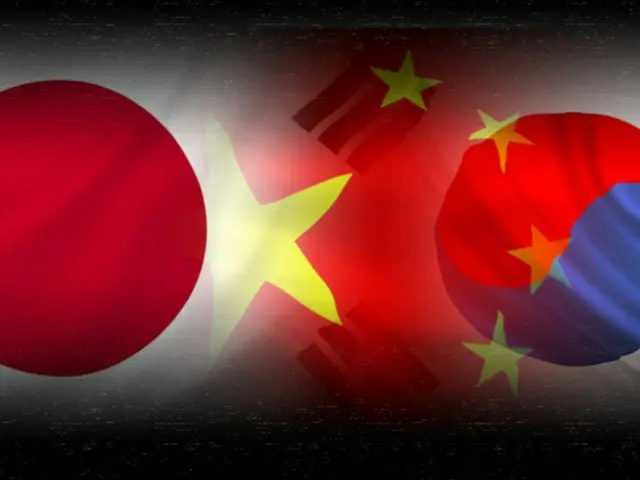
The two governments are planning to hold a "shuttle diplomacy" program in which leaders of both countries visit each other, with Lee visiting Japan in January next year.
Arrangements are underway to hold the meeting in Takaichi's hometown of Nara. Meanwhile, at a press conference for foreign journalists held on the 3rd of this month, Li said, "China and South Korea are neighbors in terms of geography, economy, history, and socio-cultural differences.
He also emphasized that the two countries have an inseparable relationship, even if they are not inseparable. He expressed his desire to visit China early next year and meet with President Xi Jinping. Regarding China-Korea relations, South Korea announced in 2017 that it had signed a treaty to allow the US military to use the Korean peninsula.
When South Korea deployed the Terminal High Altitude Area Defense (THAAD) missile system domestically, China reacted strongly, and relations between the two countries cooled. China subsequently imposed measures such as restricting the import of South Korean films and travel by Chinese nationals.
China's de facto "ban on Korean entertainment" remains in effect. Meanwhile, last month, President Lee met with Chinese President Xi Jinping, who visited Korea for the first time in 11 years, and the Chinese and Korean leaders.
The two leaders also discussed expanding cultural exchanges. In response to this, there are speculations in South Korea that the "ban on Korea" will be relaxed in the future. The South Korean government, along with this, is taking measures to strengthen Sino-South Korean relations.
In light of this situation, South Korea probably does not want to become embroiled in a conflict between Japan and China.
At a House of Representatives Budget Committee meeting last month, Prime Minister Takaichi said that if a Taiwan emergency were to occur, Japan would be able to take collective measures.
The Chinese side responded that this could be an "existence-threatening situation" in which they could exercise the right of self-defense. This caused a backlash from China, who immediately called on their citizens to refrain from traveling to Japan, postponed the release of Japanese anime, and suspended the sale of Japanese fisheries products.
China has imposed a series of economic countermeasures, including a de facto suspension of imports of certain products, and the impact on the Japanese economy in the future is immeasurable. On the 5th of this month, the Chinese Ministry of Commerce issued a statement to Takaichi at a press conference, saying, "Please correct your erroneous words and actions."
"We urge Japan to immediately revise its stance and demonstrate its commitment to China through concrete actions," he said. He then hinted at countermeasures, saying, "If Japan acts unilaterally, China will take necessary measures."
The conflict between Japan and China is also affecting cooperation among the three countries. China postponed the Japan-China-Korea Cultural Ministers' Meeting, which was scheduled to be held in Macau last month. Preparations are also underway to hold the meeting within the year.
Regarding the planned summit between Japan, China and South Korea, China has indicated that it cannot be held at this time due to Takaichi's remarks.
China and South Korea have been holding the forum independently since 2008, rather than in conjunction with an international conference, in an effort to hold future-oriented discussions aimed at resolving common issues. Since then, the forum has been held periodically, rotating among the three countries.
Up until now, they have discussed how to respond to North Korea's nuclear and missile development, as well as economic cooperation. Since the eighth summit was held in Chengdu, Sichuan Province, China in December 2019, the two sides have been discussing the worsening of Japan-South Korea relations and
The summit had been postponed due to the spread of COVID-19, but was finally held in May last year for the first time in about four and a half years. The joint declaration, which included cooperation in six areas including climate change and disaster prevention, stated,
At the meeting of the foreign ministers of the three countries held in Tokyo in March this year, they announced their intention to hold the 10th summit as soon as possible.
Japan, the chair country, had been making the necessary adjustments. If Chinese Premier Li Qiang were to visit Japan following the meeting, it would have been the first visit by a Chinese premier to Japan since May 2018.
However, it has become clear that the meeting, which was expected to be held within the year, will be postponed. What stance will South Korea take in the Japan-China conflict? President Lee
At a press conference, he touched on the rapidly deteriorating Japan-China relations, saying, "If we take sides, it will be a factor that liquefies the conflict," and expressed a wait-and-see attitude.
Lee also said, "Rather than taking sides, we will try to find a way for everyone to coexist, and if there are any areas where we can mediate, we will play a role."
Ambassador Lee Hyuk also spoke at a press conference held at the Japan National Press Club in Tokyo on the 5th.
Regarding the Japan-China conflict, he said, "The Lee Jae-myung administration places importance on both Japan-Korea relations and China-Korea relations," and added, "It is Korea's role to create an atmosphere that will lead to improved Japan-China relations."
2025/12/09 09:58 KST
Copyrights(C)wowkorea.jp 2